
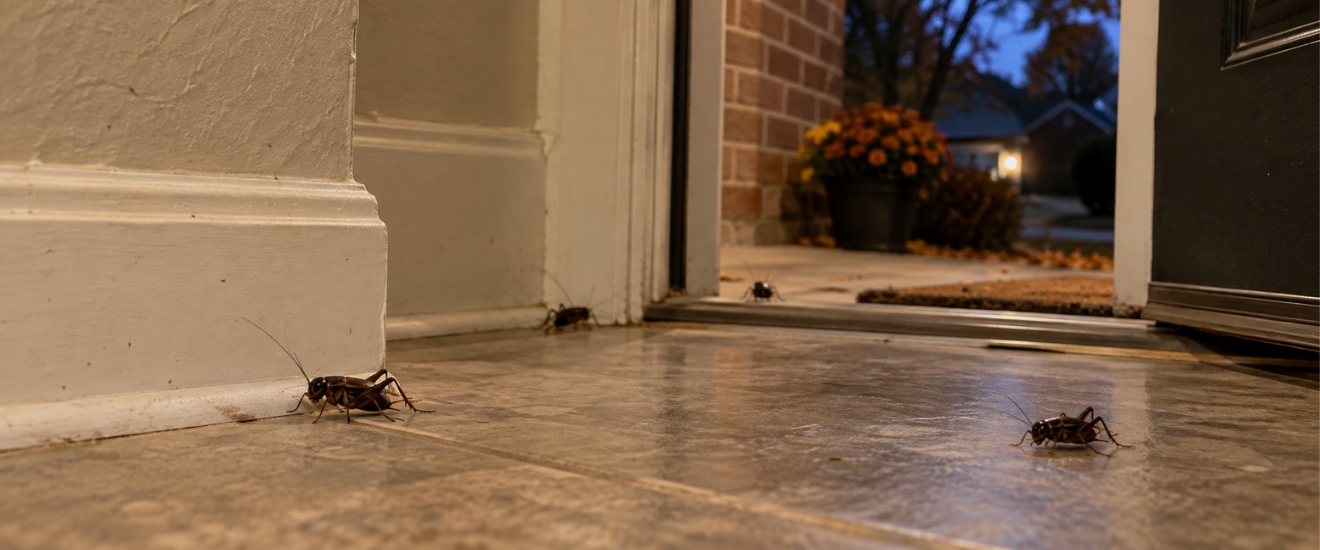
A porch full of crickets can appear quickly when adult field crickets become abundant and gather near outdoor lights. Around Lawton, late summer and fall conditions can bring these insects close to entryways, especially where lighting, cover, and open gaps occur together. To understand a fall cricket problem, start with the place they gather and how that location connects to the house. We consider both as part of our residential pest control, addressing nuisance insects alongside the conditions that allow them indoors.
Adult Activity and Lighting Can Concentrate Crickets
Field crickets spend much of their time outdoors in grass, vegetation, and sheltered ground-level spaces. Their numbers fluctuate with weather and the success of earlier life stages. When many adults are active, a porch or garage light can become a gathering point. A large cluster at the door may reflect attraction to that particular light combined with nearby habitat.
Even neighboring houses can experience different levels of activity. One has a bright fixture directly above a frequently opened door, while another has shielded lighting farther from the entrance. Ground cover, irrigation, and accumulated materials also affect where crickets can shelter during the day. Those property details help explain why activity concentrates in one corner of your home.
Fall weather in Southwest Oklahoma can change between mild periods and cold fronts. Cricket activity can change with those conditions, but the calendar alone tells you little about what will happen at your door on a particular night. Watch where insects are collecting and whether they continue to appear inside. That pattern gives you a practical basis for choosing improvements.
The Threshold Turns an Outdoor Gathering Into an Indoor Problem
A cricket attracted to the porch light has only a short distance to travel when the door opens. A gap beneath the door provides access after it closes. Worn sweeps, uneven thresholds, and damaged weatherstripping can leave space at the bottom corners where insects move along the wall. Start your inspection there if most indoor sightings occur near the entrance.
Garage doors create a wider version of the same issue. Crickets can enter while the door remains open during evening chores, then settle behind storage or along the slab edge. A damaged bottom seal allows continued access between uses. Check the side door as well, since a small opening there can bypass improvements to the large vehicle door.
Windows and utility penetrations also deserve attention when sightings occur farther from the main entry. Repair damaged screens and use appropriate materials around gaps in the exterior. Keep required drainage and ventilation openings functional. Match the improvement to the opening rather than sealing around moving parts or blocking a vent that needs airflow.
Dark field crickets with prominent hind legs are a familiar outdoor visitor. Chirping can help draw your attention to a hidden adult male, but identification also depends on appearance. A wingless, humpbacked cricket in a damp storage area may point toward a different kind of cricket and a different set of conditions. A clear photo helps us determine which explanation fits.
The location of repeated sightings is useful too. Field crickets collecting at a lit doorway suggest an outdoor source. Persistent activity deep inside a damp, sheltered area calls for an inspection of that space. Trying to solve both situations with the same spray can leave the underlying conditions untouched. We use the pest’s identity and the distribution of activity to guide the response.
Crickets can become a nuisance through nighttime noise, frequent indoor sightings, and accumulation around entrances. Some can also chew fabrics or other materials under suitable conditions. Inspect vulnerable stored items if crickets have remained in that area, especially soiled fabric or belongings kept directly on the floor. Address the source before damage or repeated cleanup becomes part of your routine.
Change the Conditions Around the Light
If a light draws insects directly to your door, consider whether its position, shielding, or operating schedule can change. A motion sensor or timer may reduce unnecessary hours of attraction where appropriate. Warm-colored or amber lighting generally attracts fewer insects than some bright white sources, although insects may still gather. Keep enough illumination for steps, locks, and walkways.
Clear leaves and loose debris from the base of the wall near that light. Lift unused containers and remove objects that leave hidden cavities beside the threshold. Trim vegetation that obstructs the entrance and correct irrigation that keeps the immediate area persistently wet. These changes reduce daytime shelter next to the nighttime gathering place.
Cleanup after a heavy gathering also helps you judge what is happening next. Remove dead insects from accessible surfaces and watch for new arrivals. Large accumulations can attract scavengers and make continued activity harder to assess. Handle ordinary insect debris separately from any suspected rodent contamination, which requires a different cleanup process.
Address Indoor Activity Without Scattering Products Everywhere
For an occasional indoor cricket, physical removal may be sufficient while you correct the entry gap. Use a vacuum in an area containing ordinary insect debris, then empty or dispose of the contents appropriately. Move nearby clutter so you can see whether additional crickets remain. Repeated arrivals over several evenings suggest that the outdoor gathering or access route still needs attention.
Avoid applying outdoor pesticides indoors or placing products where people and pets could contact them contrary to the label. Any treatment should fit the pest, location, and product directions. If you have already applied something, tell us what it was and where it went. That information helps us plan the next step and avoid conflicting applications.
At Boots Pest & Weed Control, we evaluate cricket activity alongside the other insects around your home and discuss appropriate treatment and exclusion improvements. The aim is to reduce arrivals at the source and close the easiest paths inside. Changes to lighting or door seals can continue helping after the seasonal concentration has passed.
When crickets keep collecting at your Lawton entryway or chirping from concealed indoor spaces, ask us about a pest inspection. We will help identify the cricket and focus the response on the area that is sustaining the problem.