
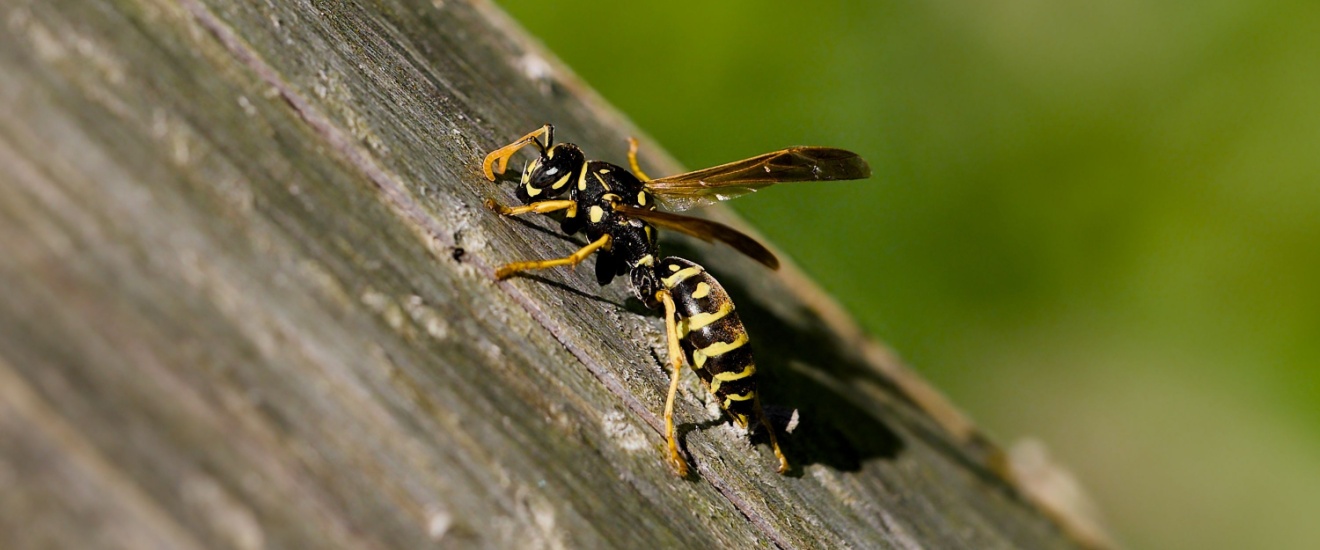
Several kinds of stinging insects share yards around Elgin and Lawton, and they are easy to confuse with one another. Telling them apart matters, because each builds nests in different places and calls for a different treatment approach. Knowing which insect is active around a home also helps a homeowner judge the risk and respond safely. For properties dealing with repeated activity, professional pest control in Lawton addresses the specific species involved.
Paper Wasps
Paper wasps are among the most common stinging insects in the area. They build open, umbrella-shaped nests that hang from a single stalk under eaves, soffits, porch ceilings, and play structures. The nest is grayish and made of a papery material the wasps produce by chewing wood fibers. Paper wasps are not highly aggressive on their own, but they will defend the nest when it is disturbed, which makes nests near doorways and walkways a concern.
Yellow Jackets
Yellow jackets are the most aggressive of the local stinging insects. They often nest in the ground, in wall voids, or in other enclosed spaces, so a nest can go unnoticed until someone disturbs it. Yellow jackets can sting repeatedly, and a disturbed colony may respond in large numbers. Their tendency to seek food around people increases as summer ends and their natural food becomes harder to find, which is when they often turn up around outdoor meals and trash containers.
Hornets
Hornets, including bald-faced hornets, build large, enclosed, football-shaped nests in trees, shrubs, and sometimes on building overhangs. These nests can reach a considerable size by late summer and may hold a large number of insects. Hornets defend their nests vigorously, so a nest near a home should be treated with caution rather than approached.
Carpenter Bees
Carpenter bees differ from the others because they do not live in colonies. A female bores a round hole into unpainted or weathered wood, such as porch rails, fascia boards, and deck posts, then tunnels inside to lay her eggs. They are less likely to sting, but their tunneling can weaken wood over time, and the activity often repeats year after year in the same locations. Over several seasons, repeated tunneling in the same board can cause noticeable structural damage and attract woodpeckers that enlarge the holes while feeding on the larvae.
Identifying the Insect and Treating It Correctly
Because each of these insects nests differently and poses a different level of risk, correct identification is the first step in dealing with them. Boots Pest & Weed Control is a locally owned company based in Elgin that serves Elgin, Lawton, and the surrounding Southwest Oklahoma communities. The team identifies the specific stinging insect before treating and removes accessible nests when it is safe to do so. Every service is backed by a one hundred percent satisfaction guarantee, so a homeowner is not left with a nest that was missed or only partly treated.
If stinging insects are active around your home, contact the team for a free quote and an accurate identification of what you are dealing with.