
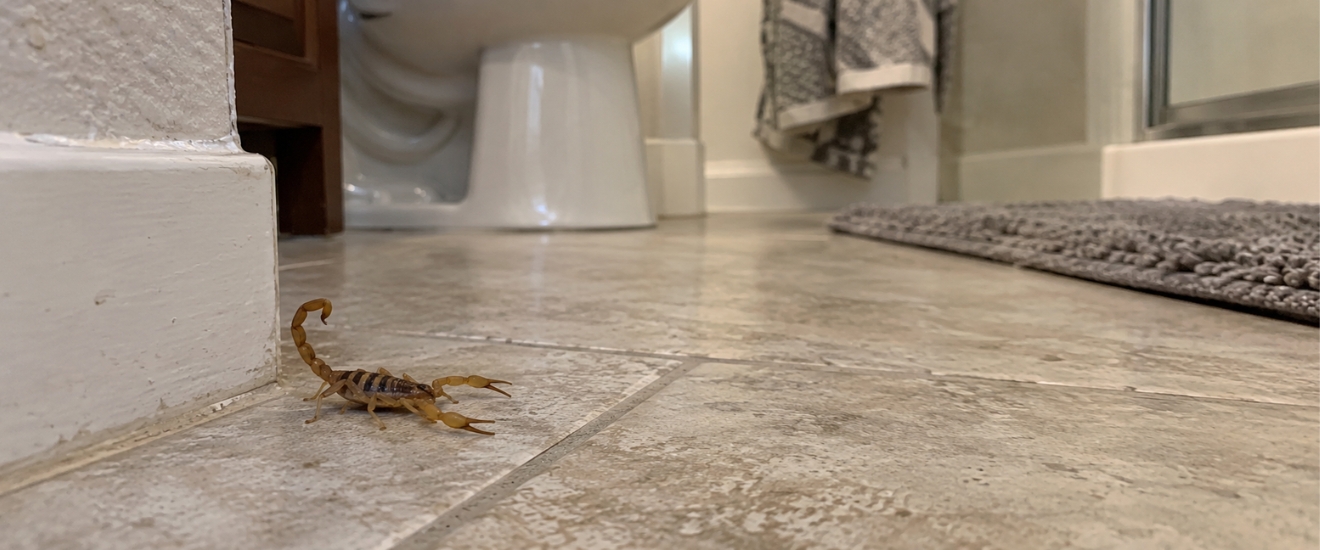
Finding a scorpion on your bathroom floor raises immediate questions about where it came from and whether others are nearby. In Lawton, scorpions can enter through small openings while searching for shelter or prey, then remain hidden between sightings. Our scorpion control services address the places they shelter around your property and the routes that connect those spaces to your home. Understanding their habits helps you decide what to check and how to reduce another encounter.
Recognizing a Scorpion Around Your Home
A scorpion has eight legs, a pair of pincers, and a segmented tail ending in a stinger. The striped bark scorpion is a familiar species in Oklahoma. Its generally tan body and darker markings can blend into wood, soil, and landscaping materials, making a resting scorpion easy to overlook. Size and color vary, so a clear photograph taken from a safe distance is more useful for identification than a quick impression during a surprise encounter.
Scorpions usually become active after dark. During daylight, they fit into protected spaces beneath objects or inside narrow crevices. You might find one when picking up a shoe, moving a storage container, or reaching for something beside a wall. Those encounters often involve disturbing a concealed animal. Give yourself room to see what you are handling, particularly in a garage or storage area where items sit untouched for weeks.
Why Your Property Can Provide Suitable Shelter
The rocky surroundings of Southwest Oklahoma help explain why scorpions are a relevant local concern. Around a house, landscaping stone, stacked pavers, loose boards, and firewood can provide similar protected spaces. A shaded gap beneath a planter may also shelter insects that scorpions eat. Several small features close together can support activity even when the rest of your yard looks tidy.
Food availability contributes to where scorpions spend time. Crickets and other small arthropods around exterior walls provide potential prey. Outdoor lights can concentrate some of those insects near doors, while clutter gives predators cover nearby. Look at the combination of shelter and food when evaluating a problem area. A scorpion beside the back door may have come from a nearby stack of materials rather than from the center of the lawn.
Moisture can play a role without making every wet spot a scorpion hotspot. Leaking plumbing or persistent dampness near the house may support insects and provide a useful resource. Address leaks and drainage problems, but keep the inspection broad enough to include dry cracks, wood piles, and stone features. Scorpions can occupy sheltered locations with very different surface conditions.
What an Indoor Sighting Tells You
An indoor scorpion confirms that one reached your living space. Repeated sightings in the same room, near the same doorway, or along an adjoining garage wall give us additional information about possible movement. The location where you discover one is a starting point for inspection. Scorpions can travel after entering, so the closest visible crack may have little connection to the actual entry route.
After a bathroom sighting, check the room’s surroundings, including plumbing penetrations, baseboards, and nearby wall openings. A smooth bathtub can also leave a wandering scorpion stranded and easier to notice. Before assuming it traveled through the drain, consider the accessible routes into the room and the spaces above or beside the tub. Keep the bathroom closed to children and pets while the animal’s location is uncertain.
If sightings continue, note which rooms are involved and whether they share an exterior wall. You can also tell us about recent movement of firewood, landscaping materials, or stored belongings. These details help focus an inspection without requiring you to dismantle furniture, open walls, or handle the animal. Leave those concealed spaces undisturbed until you have a safe plan.
Reducing Encounters Inside
Start with the areas where your hands and feet could contact something hidden. Keep shoes off cluttered garage floors and inspect them before wearing them. Lift clothing and towels from the floor, and use a light before reaching behind stored items. Gloves help during outdoor work, but use tools and visible handholds when moving materials that could conceal a scorpion.
Check door sweeps and weatherstripping for gaps, especially at the corners of exterior doors. Look around utility penetrations for openings that need an appropriate seal. Garage doors deserve attention along both the bottom and sides. Preserve ventilation and drainage when making improvements, and use suitable pest-resistant components for openings that serve a building function. Filling every visible opening with foam can create other maintenance problems.
If someone is stung, seek medical guidance promptly, particularly for a child or anyone with concerning symptoms. Breathing difficulty or other severe symptoms require emergency care. Keep people and pets away from the scorpion, and avoid trying to catch it for identification. A photograph is useful only when you can take it without getting close enough to be stung.
Building a Practical Control Plan
Outdoor changes should make hiding places easier to inspect and reduce cover immediately beside the house. Move spare materials into orderly storage, keep firewood separated from exterior walls, and clear accumulated debris beneath shelving or patio furniture. Work in manageable sections so you can see what you are moving. If scorpions are already appearing regularly, discuss the cleanup sequence with us before disturbing a large sheltering area.
At Boots Pest & Weed Control, our scorpion service combines inspection, treatment of suitable areas, and recommendations for reducing habitat and entry opportunities. The treatment plan depends on your home’s layout and the evidence we find. We also consider insect activity that can sustain scorpions near the structure. Continued sightings call for follow-up so the plan can address remaining shelter or access routes.
You can schedule a scorpion inspection with us when scorpions appear inside your Lawton home. Tell us where you found them and which nearby spaces are difficult to check. We will help you address the conditions behind those encounters and choose practical next steps for your property.