
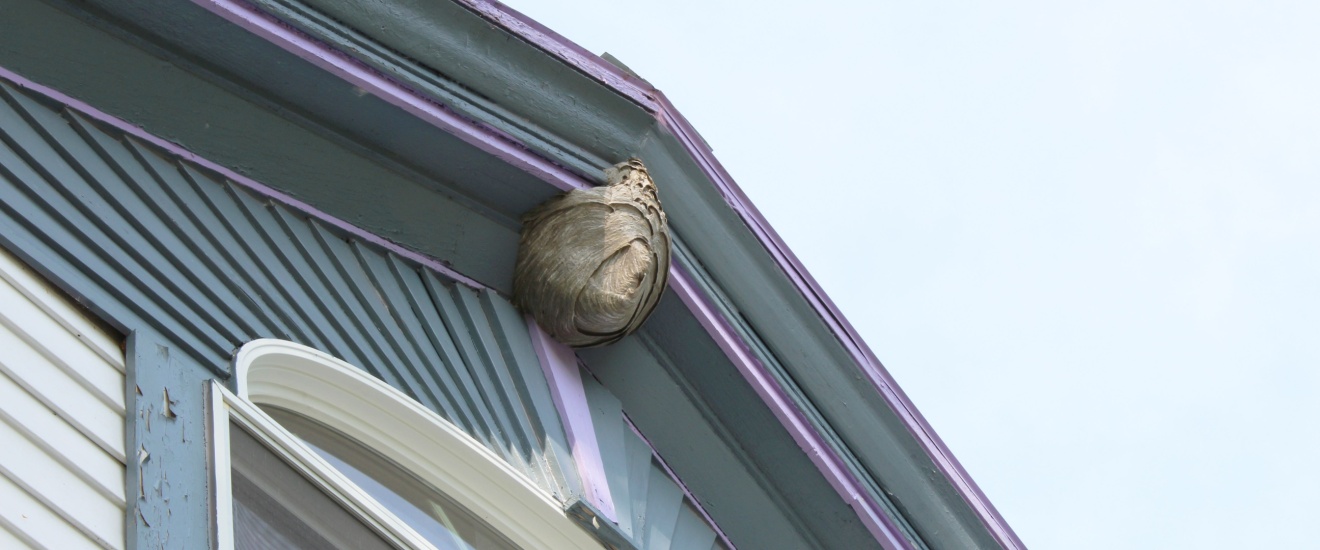
Wasps choose sheltered, protected spots for their nests, favoring locations that shield the colony from weather and sit close to food. Around Elgin homes, the same handful of locations come up again and again. Knowing where wasps tend to build helps homeowners find a nest early, before the colony grows large, and pest control in Elgin makes removing an established nest safer.
A nest that is small and new is far easier to handle than one that has grown through the summer, so a quick check of the right spots every few weeks can save a homeowner from a much larger problem later. Wasps favor a few predictable areas around a house. The five most common are described below.
1. Under eaves and soffits: The overhang along a roofline is one of the most frequent nesting spots. It provides overhead cover and a flat surface where paper wasps can anchor an umbrella-shaped nest, often directly above doors and windows where people pass underneath without looking up.
2. Porch and patio ceilings: Covered porches and patios give wasps the same protection as eaves, with the added appeal of being close to outdoor seating. A nest in this location places the colony near where people gather and eat, which raises the chance of a disturbance and a sting.
3. Sheds, garages, and other outbuildings: Structures that stay quiet and are entered only occasionally allow nests to grow undisturbed. Open rafters, ceiling corners, and gaps around doors give wasps both shelter and a way in and out, and a nest can become well established before anyone notices.
4. Trees and dense shrubs: Hornets in particular build large, enclosed nests in trees and heavy shrubs, where foliage hides the nest from view. A nest can reach a substantial size before it is spotted during routine yard work or pruning.
5. Wall voids and the ground near the foundation: Yellow jackets often nest inside wall voids or in the ground close to a foundation. These hidden nests are the most easily disturbed, because a homeowner may not know one is there until mowing or working nearby brings the colony out in force. An entry point no wider than a pencil can lead to a large nest inside a wall, which is one reason these locations are best left to a professional.
Finding a Nest on Your Property
A nest in any of these locations is easier and safer to handle before the colony reaches its late-summer peak. Boots Pest & Weed Control treats and removes accessible nests when possible and applies products that discourage wasps from rebuilding in the same spot. Stinging insects build new nests each year, so checking these five areas in spring and early summer, when colonies are still small, gives a homeowner the best chance to address a problem early. The company uses EPA-approved products applied with the safety of people and pets in mind.
If you have found a nest or suspect one is hidden on your property, contact the team for a free quote and a full inspection.